
Written By Syed Arbaz Shahbazi
Sultan al-Muwaḥḥidīn, Hazrat Shah Muhammad Ghawth Gwaliori
Birth
Among the radiant constellations of the noble Silsilah-e-Shattariyyah, one of its most resplendent stars is Sultan al-Muwaḥḥidīn, Hazrat Shah Muhammad Ghawth Gwaliori (RA).
In his own revered work, Awrād-e-Ghawthiyyah, the Shaykh (RA) records that he was born on Friday, the 7th of Rajab, 907 Hijri, corresponding to January 15th, 1502 CE, shortly before the congregational prayer of Jumu‘ah.
His blessed birthplace was Zahurabad, in the district of Gazipur, Patna, within the land of Bihar.
Lineage
The noble father of the Shaykh (RA) was Khatiruddin, and his revered grandfather bore the name ‘Abd al-Latif.
The Shaykh (RA) descended from the illustrious spiritual lineage of the eminent Sufi saint, Hazrat Shaykh Fariduddin Attar of Nishapur (RA), may Allah sanctify his secret.
The ancestral home of his forefathers was in the ancient city of Nishapur, Iran. From there, his great-grandfather, Hazrat Shaykh Mu‘inuddin Qattal (RA), was the first of the family to journey to the lands of Hindustan, where he ultimately departed this world in the city of Jaunpur.
The Shaykh (RA) was blessed with seven brothers, among whom he shone as a luminous spiritual presence, destined for divine proximity and universal guidance.
Childhood and Pursuit of Knowledge
From the earliest days of his childhood, Hazrat Shah Muhammad Ghawth Gwaliori (RA) conducted himself with extraordinary discipline, vigilance, and sincerity. Not a single moment of his blessed youth was wasted in frivolity or idle pursuits.
Concerning his own early life, the Shaykh (RA) himself records:
“When I was seven years old, I entered upon the path of Tasawwuf.”
Although many historians have asserted that he did not receive any formal, institutional religious education, this claim is not entirely accurate. In fact, the most ancient and reliable of his biographical accounts, authored by his beloved disciple and Khalifah, Hazrat Fazlullah Shattari (RA), attests that the Shaykh (RA) did indeed pursue formal studies. He acquired knowledge of Arabic grammar (Naḥw), morphology (Ṣarf), jurisprudence (Fiqh), Qur’anic exegesis, and Hadith.
During his student years, while residing in the home of Qadi Sadr-e Jahan (RA) of Jaunpur, he studied under his guidance the renowned text of Arabic grammar, al-Kāfiyah. By the age of fifteen, he had completed the full course of traditional education with distinction.
In his revered work Awrād-e-Ghawthiyyah, the Shaykh (RA) offers a concise autobiographical reflection of his life up to the age of forty-three:
“When this darwīsh was seven years of age, he entered upon this Path. At nine, he attained ma‘rifah (gnosis). At fifteen, he began guiding others upon the Way. At twenty-two, he was granted mi‘rāj (spiritual ascension). At twenty-five, he acquired the capacity to cultivate disciples equal to himself in knowledge and spiritual rank. By the age of thirty-three, he had become the spiritual heart of the people, attaining the station of Imamate and leadership. At forty, circumstances brought him into disagreement and estrangement with the rulers of the age, compelling him to leave that land. He migrated to Gujarat, and near the fortress of Champanir, he completed the writing of his book Awrād-e-Ghawthiyyah. At that time, this faqīr was forty-three years old. The above account was recorded in the month of Jumada al-Awwal, in the year 949 Hijri.”
Bay‘ah and the Attainment of “Ghawthiyyah”
In his work Manāqib-e-Ghawthiyyah, Hazrat Shaykh Fazlullah Shattari (RA) narrates a momentous episode from the life of Hazrat Shah Muhammad Ghawth Gwaliori (RA).
During the period of his stay in Jaunpur, the Shaykh (RA) would regularly visit the blessed shrine of his great-grandfather, Hazrat Shaykh Mu‘inuddin Qattal (RA), to offer salutations and spiritual devotion.
On one such visit, a deep longing arose within his heart, and he resolved to spend the night by the sacred tomb. Immersed in remembrance, he fell into a gentle slumber in the stillness of night. In that state between wakefulness and dream, he heard a voice calling to him:
“O Muhammad! Go forth to serve the Siddiqi master, Hazrat Shaykh Abul Fath Hidayatullah Sarmast (RA). Bear his sandals in humility, for through that service the hidden potentials within you shall be unveiled.”
Awakening from this vision, the Shaykh (RA) immediately left Jaunpur and journeyed to the town of Gor, where he presented himself before Hazrat Shaykh Abul Fath Hidayatullah Sarmast (RA), who would later depart from this world in 946 Hijri.
There he remained for a time, receiving abundant faiz (spiritual grace) from his master. Afterward, by divine indication, he traveled to a place called Kanodar, and from there to another distant town. Near that region he beheld a mountain, and upon inquiry learned that a saintly man resided upon its summit.
A profound yearning stirred within him to meet that saint. Ascending the mountain, he found the venerable elder, who welcomed him with radiant affection. Drawing him close, the saint said:
“Khush āmadīd, welcome, O beloved! You have done well to come, and you have arrived precisely at the appointed time. I have long awaited your coming. Allah, Exalted is He, has bestowed upon me the maqām of Ghawthiyyah, yet my earthly time now draws to its end. Some time ago, I was shown your form and told of your attributes, and commanded thus: ‘When that person arrives at such-and-such a time, entrust to him the station of Ghawthiyyah, and prepare yourself to return to your Lord.’
Alhamdulillah, I now deliver to you that trust (amānah). You may now go as you wish.”
The Shaykh (RA) descended from the mountain with a heart illuminated by awe and gratitude. The next day, yearning once more to behold the saint, he returned to the mountain. There he found the elder in the state of prostration, having completed his prayer, and his blessed soul had already departed to the Divine Presence.
With reverent care, the Shaykh (RA) personally performed the rites of ghusl, kafan, and burial, and after completing the funeral, he departed from that sacred place.
He then returned to Gor and presented himself once again before Hazrat Shaykh Abul Fath Hidayatullah Sarmast (RA), expressing his desire to take bay‘ah (spiritual allegiance) at his blessed hand.
The noble Shaykh (RA) replied:
“Your bay‘ah is destined at the hand of Shaykh Haji Hamiduddin (RA) of Saharanpur. Therefore, go to him.”
Obedient to this command, Hazrat Shah Muhammad Ghawth (RA) journeyed to Saharanpur. Upon arrival, he humbly kissed the feet of Hazrat Shaykh Haji Hamiduddin Hasur (RA), who later passed away in 930 Hijri, and took bay‘ah at his blessed hand.
According to the narration of Hazrat Shaykh ‘Abdul Haqq Muhaddith Dehlavi (RA) in Akhbar al-Akhyar, all seven brothers of Shaykh Ghawth (RA) were also honored with bay‘ah during this sacred occasion.
Retreat from Society and the Composition of “Jawāhir-e-Khamsa”
Thereafter, in obedience to the sacred instruction of his Murshid, Hazrat Shaykh Haji Hamiduddin (RA), the Shaykh (RA) withdrew from human habitation and journeyed into the deep forests of Chunar. There, in solitude and silence, he devoted himself to intense mujāhadah, spiritual struggle and discipline of the self.
For twelve long years, he remained immersed in rigorous ascetic practice, striving in the purification of the nafs and in constant remembrance of Allah. During this period of seclusion, he subsisted solely on leaves and wild fruits, entirely detached from the comforts and indulgences of the world.
It was in the midst of this prolonged retreat that the Shaykh (RA) composed his world-renowned treatise, Jawāhir-e-Khamsa, “The Five Jewels.”
This sacred work, born out of spiritual unveiling and divine inspiration, became one of the most celebrated manuals of the Shattariyyah path, a luminous synthesis of esoteric knowledge and experiential gnosis.
Upon completing his mujāhadah, the Shaykh (RA) returned to his Murshid and humbly presented to him the completed manuscript of Jawāhir-e-Khamsa. Witnessing the beauty, depth, and originality of his disciple’s work, the Murshid (RA) was overcome with joy and spiritual pride, praising Allah for having blessed him with such a luminous heir of the Path.
Ijāzah and Khilāfah
After the completion of his rigorous spiritual training and divine preparation, Hazrat Shah Muhammad Ghawth Gwaliori (RA) was invested by his noble Murshid with the sacred mantle of Khilāfah, full authorization to guide others upon the Path. Along with this spiritual succession, he was also granted ijazah (permission) to confer bay‘ah in the Shattariyyah order as well as in several other blessed Sufi lineages.
It is worth noting that many hold the view that the Shattariyyah order was founded by Shaykh Sirajuddin ‘Abdullah Shattar (RA). However, this understanding is not entirely accurate. In truth, the spiritual originator of the Shattariyyah path was Hazrat Sultan al-‘Arifin Bayazid Bistami (RA).
In the lands of Iran, this order was originally known as Ishqiyyah, “the Path of Divine Love.”
In Rum (Anatolia), it came to be known as Bistamiyyah, in honor of Bayazid Bistami (RA).
Later, within the Indian subcontinent, Shaykh Sirajuddin ‘Abdullah Shattar (RA) introduced and established it under the name Shattariyyah, by which it became renowned.
According to Mufti Ghulam Sarwar Lahori, the esteemed author of Khazīnat al-Asfiyā, Hazrat Shah Muhammad Ghawth (RA) was granted authorization to initiate disciples in fourteen distinct Sufi orders.
In his own sacred text, Awrād-e-Ghawthiyyah, the Shaykh (RA) explicitly mentions the orders from which he received spiritual grace (faiz) and transmission. Among these are:
- Chishtiyyah
- Firdawsiyyah
- Suhrawardiyyah
- Qadiriyyah
- Tayfūriyyah
- Khalwatiyyah
- Rabbaniyyah
- Madariyyah
Thus, his spiritual inheritance was not confined to a single chain but embodied the synthesis of many luminous rivers of Divine knowledge, all converging in the oceanic heart of Shaykh Ghawth (RA).
Journey to Gwalior
After receiving the blessed Khilāfah and the overflowing faiz (spiritual grace) from his noble Murshid, Hazrat Shah Muhammad Ghawth Gwaliori (RA) humbly inquired where his next destination and permanent abode should be.
The venerable Murshid-e-Pāk responded with luminous wisdom:
“The entire world is open before you. I do not wish to confine you to any particular place. Go wherever your heart inclines.”
Upon hearing these sacred words, the Shaykh (RA) entered deep murāqabah (contemplative meditation). In the state of spiritual vision, his heart was divinely drawn toward the land of Gwalior. Obeying this inner inspiration, he set out upon his journey and eventually arrived in that ancient city.
Settling within the fortress of Gwalior, he began to reside there, establishing his blessed presence upon its heights. It was during the reign of the Mughal Emperor Jalaluddin Muhammad Akbar, a period when the city of Gwalior was adorned with the presence of many Auliyā’ Kirām (friends of Allah) and Sāliḥīn (righteous servants).
Among these illuminated souls was Hazrat Shah Muhammad Ghawth (RA), distinguished not only for his sanctity but for his station of Maqām-e-Ghawthiyyah, the exalted spiritual rank of the Ghawth, the divine succor and pole of his age.
Shaykh Muhammad Ghawth RA) and
the Mughal Emperors
From the earliest years of Emperor Akbar’s reign, the blessed city of Gwalior had already become radiant with the presence of Shaykh Muhammad Ghawth (RA), and countless disciples, seekers, and lovers were drawn to his spiritual light.
Both Emperor Humāyūn and his son Jalāluddīn Muhammad Akbar held the Shaykh in profound and unfeigned reverence. Their hearts overflowed with love for him, so much so that, whenever they wrote to the Shaykh, they would address him with the exalted titles “Pīrān-e-Pīr” (the Master of Masters) and “Ghawth al-Thaqalayn” (the Helper of both the human and jinn realms).
The historian Thomas William Beale, in his Oriental Biographical Dictionary, notes that Shaykh Muhammad Ghawth (RA) was a mustaǧāb al-da‘wāt, one whose prayers were never rejected.
Whatever he foretold, by the permission of Allah Almighty, would come to pass exactly as he had uttered. For this reason, his fame spread far and wide, and kings and rulers of his age would come to his court with utmost humility and respect.
It is noteworthy that all three Mughal emperors, Bābur, Humāyūn, and Akbar, were among the devoted admirers of the Shaykh (RA). During Emperor Bābur’s campaign for the conquest of the fort of Gwalior against Tatar Khan, Shaykh Muhammad Ghawth (RA) played a unique and unforgettable role, one that remains enshrined in the chronicles of both history and spiritual tradition.
Humāyūn, who was six years younger than the Shaykh (RA), shared with him a bond of deep friendship and affection, and he too was among his sincere devotees.
Among those who drank from the Shaykh’s ocean of wisdom was also the famed court musician of Akbar’s royal assembly, Miyān Tansen. Deeply devoted to his spiritual master, Tansen would regularly visit Shaykh Muhammad Ghawth (RA), drawing from him inspiration that transcended the realm of sound, transforming music into remembrance.
When Miyān Tansen passed away in 1586 CE in Delhi, his body was carried, according to his own will, over three hundred and fifty kilometers to Gwalior. There, at the sacred feet of his master, he was laid to rest beside the blessed shrine (Mazār Sharīf) of Hazrat Shaykh Muhammad Ghawth Gwaliori (RA), sealing forever his bond of love and discipleship.
The Departure from Gwalior and the Fatwā Against the Shaykh
In the year 947 AH, when Sher Shah Suri rose to political power, he began, without just cause, to harass and trouble Shaykh Muhammad Ghawth (RA) in various ways. Unable to bear such hostility, the Shaykh was compelled to leave his beloved abode in Gwalior and set forth toward Gujarat. At that time, the Shaykh was precisely forty years of age.
During his stay in Gujarat, the Shaykh (RA) expressed certain spiritual insights and mystical views which, when seen only through the lens of outward jurisprudence, appeared contrary to the literal bounds of Sharī‘ah. As a result, a number of ‘Ulamā-e-Zāhir, scholars of the outward sciences, began to vehemently oppose him. Their criticism intensified to such an extent that they did not hesitate to pronounce upon him a fatwā of kufr (heresy).
In their zeal, they gathered collective signatures from various jurists to support a decree of execution, a tragic reflection of how the luminous insights of the friends of Allah are often misunderstood by those bound by form alone.
The historian Mullā ‘Abdul Qādir Badāyūnī records in his chronicles that:
“When Sultan Mahmūd of Gujarat was in power and Shaykh Muhammad Ghawth (RA) arrived there, one of the distinguished scholars of that era, the venerable ‘Allāmah ‘Alī al-Muttaqī al-Hindī (RA), compiler of the renowned Kanz al-‘Ummāl, issued a fatwā condemning the Shaykh to death.”
Having received this decree, the Sultan, unwilling to decide alone on such a grave matter, placed its final judgment in the hands of one of the most revered and sagacious scholars of the time, Mawlānā Shaykh Wajīhuddīn ‘Alawī al-Ghujarātī (RA), a man celebrated throughout the land for his wisdom and piety.
Shaykh Wajīhuddīn al-Ghujarātī (RA) in the Court of Shaykh Muhammad Ghawth (RA)
Thus it came to pass that Shaykh Wajīhuddīn al-Ghujarātī (RA) came into the presence of Shaykh Muhammad Ghawth (RA), intending to hear his words and examine the truth of the matter for himself. Yet, at the very first sight of the Shaykh, his heart was seized by such overwhelming reverence and love that, without awareness, he tore the fatwā of condemnation into pieces, scattering it in utter repentance.
According to another narration, Shaykh Wajīhuddīn (RA) did not come alone but arrived with two hundred and seventy scholars, all intent upon disputing and censuring the Shaykh. But when Shaykh Muhammad Ghawth (RA) turned his piercing gaze upon them, something within Wajīhuddīn’s heart was transformed. In that single glance, the veils were lifted, and he forgot entirely the arguments he had prepared. Instead, he cried out,
“Verily, you are indeed a Ghawth (a spiritual Pole)! Whoever doubts this is himself a disbeliever.”
He then testified concerning himself:
“Before this, I possessed only outward knowledge (‘ilm), but no gnosis (ma‘rifah). The one who has led me to Allah is none other than Shaykh Muhammad Ghawth (RA).”
The story did not end there. So profound was the impact of that luminous encounter that Shaykh Wajīhuddīn (RA) took bay‘ah (the pledge of spiritual allegiance) at the blessed hand of Shaykh Muhammad Ghawth (RA) in that very first meeting.
When ‘Allāmah ‘Alī al-Muttaqī al-Hindī (RA) later heard of these events, he went personally to the home of Shaykh Wajīhuddīn (RA) and reproached him, saying:
“Why did you lend your support to innovation (bid‘ah)? Do you intend to obstruct the path of Sharī‘ah?”
To this, Shaykh Wajīhuddīn (RA) replied with great composure and insight:
“Indeed, he is both Sāhib-e-Qāl (the possessor of divine speech) and Sāhib-e-Hāl (the possessor of divine state). Our limited intellects cannot comprehend the fullness of his knowledge. Even from the outer perspective of Sharī‘ah, no punishment can be prescribed for him.”
After this pronouncement, the ruling class of Gujarat themselves became devoted followers of Shaykh Muhammad Ghawth (RA). Thus, by the grace of Allah, the Shaykh emerged unscathed from this severe trial, his honor vindicated, his rank made manifest, and his light spreading yet further across the lands.
Defamation Against the Shaykh and His Departure from Gujarat
The historian Mullā ‘Abd al-Qādir al-Badāyūnī relates that on one occasion, Emperor Jalāluddīn Muhammad Akbar came personally to meet Shaykh Muhammad Ghawth (RA). The Emperor entered with deep reverence, offered salutations befitting a saint of his magnitude, and departed in a state of great spiritual awe.
Yet among those present that day was a certain scholar known as Shaykh Ghadā’ī, a man whose heart was veiled by envy and conceit. Unable to bear the honor shown by the Emperor toward the Friend of God, he fell prey to the baseness of his own soul and began a campaign of slander and malice against the Shaykh.
In various gatherings, he would produce Shaykh Muhammad Ghawth’s (RA) celebrated treatise, Mi‘rājnāmah, and, twisting its meaning, incite the common people by declaring that the Shaykh had claimed to have ascended to the heavens while awake, and, God forbid, that he had sought by this to compare himself with, or even exalt himself above, the Seal of the Prophets (peace and blessings be upon him).
This malicious distortion spread among the heedless, until the pure-hearted were pained and the devout were bewildered. When the Shaykh became aware of this vile misrepresentation of his sacred experiences, his heart was deeply grieved, not out of fear for his own reputation, but out of sorrow that such misunderstanding should darken the hearts of men toward the path of truth.
Choosing withdrawal over contention, Shaykh Muhammad Ghawth (RA) quietly departed from Gujarat. He journeyed back toward Gwalior, the city of his spiritual anchorage, and there once more devoted himself to da‘wah and hidāyah, calling souls to Divine Unity and illuminating the hearts of seekers with the light of gnosis.
His Blessed Progeny
Hazrat Shaykh Muhammad Ghawth al-Ghawaliyārī (RA) entered into four marriages and was blessed with fourteen children, nine sons and five daughters. Each of them, in their own time, was known for spiritual excellence and saintly virtue, walking in the luminous footsteps of their noble father.
Among them, however, Shaykh Ziyā’ullāh (RA) shone with particular brilliance. He was a knower of the Divine (‘ārif billāh), a master of the path of sulūk and ṭarīqah, and among the foremost scholars and mystics of his era. His inner illumination and outward learning combined harmoniously, reflecting the deep spiritual heritage of his blessed lineage.
The eminent historian Mullā ‘Abd al-Qādir al-Badāyūnī, who met Shaykh Ziyā’ullāh (RA) on two occasions, wrote of him with profound admiration:
“Shaykh Ziyā’ullāh (RA) was the spiritual successor (sajjādah-nashīn) of his father, Shaykh Muhammad Ghawth (RA). Few among the saints of his time attained a station comparable to his. In his gatherings, discourse always revolved around ma‘rifah (divine gnosis) and ḥaqīqah (ultimate reality), and the essence of every discussion was the doctrine of Tawḥīd, the Oneness of Allah, the Lord of all worlds.”
He was also a ḥāfiẓ of the Qur’ān of the highest order, and when he expounded upon the meanings of the Noble Qur’ān, he did so without recourse to any written commentary, for his understanding flowed directly from the light of revelation that illuminated his heart.
Thus, the descendants of Shaykh Muhammad Ghawth (RA) continued to be beacons of knowledge and sanctity, the living continuation of a spiritual legacy that shaped the inner landscape of Hindustan for generations.
Writings, Teachings, and Passing of the Shaykh
Mufti Ghulām Sarwar Lāhorī, in his celebrated biographical compendium Khazīnat al-Asfiyā, records that Hazrat Shaykh Muhammad Ghawth al-Ghawaliyārī (RA) was the author of numerous works, both esoteric and exoteric, encompassing the full breadth of the spiritual sciences. Among his many writings, the following attained particular renown:
- Jawāhir-e Khamsah (The Five Jewels)
- Awrād-e Ghawthiyyah
- Baḥr al-Ḥayāt (The Ocean of Life)
In addition, a number of other treatises are attributed to his blessed pen, including Jamā’ir, Basā’ir, Kalīd-e Makhāzin, Kanz al-Waḥdat, Mi‘rājnāmah, Jawāhir-e Sab‘ah, Risālah Ṣaghīr, Sharḥ-e Nūr Nāmah, Raf‘ al-Darajāt, Sabīl al-Mustahiqqīn wal-Majdhūbīn, and Ḥusn al-Akhlāq.
These writings stand as radiant witnesses to his deep insight into mystical gnosis (ma‘rifah), Divine Unity (tawḥīd), and the inner refinement of the soul.
His Counsels and Admonitions
From the treasury of his wisdom, the Shaykh (RA) left behind timeless counsels for seekers of the Path:
- Offer gratitude to Allah Almighty in all states and circumstances.
- Seek knowledge to such a degree that the truth of your faith becomes evident before you.
- Let every action of yours be adorned in the light of the Sunnah.
- Shun the company of the ignorant.
- Make adab (courtesy and spiritual etiquette) a habitual part of your daily life.
- Entrust all affairs of this world and the next to Allah, the Most High.
- Obey the guidance and instruction of your Shaykh or Murshid.
- And if you have not yet pledged allegiance (bay‘ah) to a Shaykh, then study diligently the Maktūbāt Sharīf of Shaykh Sharfuddīn Yaḥyā Manerī (RA).
Each of these advices reflects the luminous path of humility, discipline, and remembrance that characterized his own life.
His Passing and Legacy
After returning to Gwalior with his family, Hazrat Ghawth al-‘Ālam (RA) established a Khānqāh, a sanctuary of guidance and remembrance, in a locality that came to be known as Ghawspura.
His gentleness of manner, boundless compassion, and radiant humility drew multitudes towards him; many souls embraced Islam at his blessed hand.
Within his Khānqāh Sharīf, gatherings of samā‘ (spiritual audition) were held regularly, where mystical poetry on ma‘rifah and ḥaqīqah was recited in an atmosphere suffused with light and devotion.
The great sovereign of the spiritual realm, Hazrat Shaykh Muhammad Ghawth al-Ghawaliyārī (RA), answered the Divine call on the 14th of Ramaḍān, 970 AH (6 May 1563 CE), at the age of sixty-three years, in the region known as Akbarābād. Innā lillāhi wa innā ilayhi rāji‘ūn.
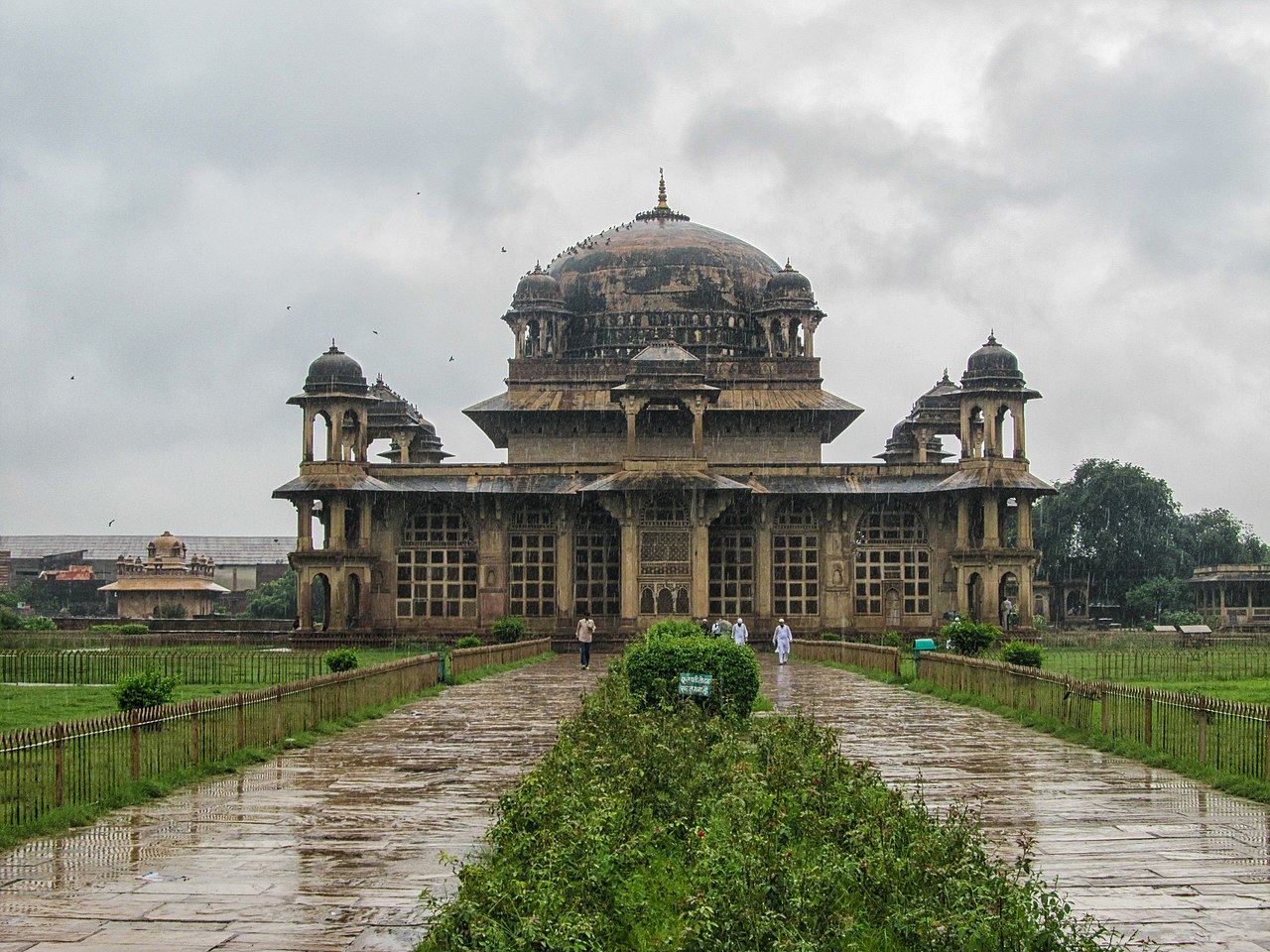
His sacred body was brought to Gwalior, where it was laid to rest. Even to this day, his blessed shrine continues to serve as a haven for the distressed and a beacon of spiritual solace for seekers of every rank.
Epilogue: The Radiance of His Legacy
The life of Hazrat Shaykh Muhammad Ghawth al-Gwaliori (RA) stands as a luminous chapter in the sacred chronicle of the Saints of Hind. Through his life, writings, and spiritual lineage, he kindled the flame of Divine Love in countless hearts and illuminated the path of inner realization for seekers of every age.
His Khānqāh became a fountainhead of enlightenment, a place where kings and commoners alike found peace, purpose, and proximity to the Divine. The fragrance of his teachings spread far beyond the boundaries of Gwalior, inspiring generations of ‘Ulamā, Fuqahā, and Ṣūfiyyah who followed in his footsteps.
In the annals of Sufi history, he is remembered not only as a scholar and saint, but as one who harmonized ‘Ilm (knowledge) with Ma‘rifah (spiritual insight), a rare confluence that uplifted both the intellect and the heart.
Even centuries after his veiling from this mortal world, the spiritual radiance (nūr) of Hazrat Ghawth (RA) continues to shine, guiding travelers on the path of Truth, and reminding all who seek that,
“The friends of Allah do not die; they merely pass from one realm of life to another.”
His shrine at Ghawspura, Gwalior, remains a living testament to his sanctity, a sanctuary of remembrance, mercy, and light, where the weary still find peace and the seekers still find direction.
May Allah grant us success in this world and the hereafter through his blessed intercession. Ameen.
Readers are requested to recite Surah Al-Fatiha and convey its reward to his noble soul