
Written By Syed Arbaz Shahbazi
Hajiul Haramain Makhdum Mir Sayyid Yasin Siwani
Birth and Lineage
Hazrat Mir Sayyid Yasin Siwani (RA) was born in the area of Samana, located near Delhi. The exact date of his birth is not recorded in historical sources. Both his paternal and maternal lineages trace back to the noble Sayyid family, making him a Najibut Tarafayn Sayyid, one whose ancestry is honored on both sides.
On his paternal side, his lineage connects to Hazrat Shah Mir (RA) and extends further to the seventh Imam of the Ahl al-Bayt, Imam Musa Kazim (AS). His ancestors were residents of Shiraz in present-day Iran, many of whom made remarkable contributions to the propagation of Hadith sciences. They were known for their deep God-consciousness, ascetic lives, and detachment from worldly pursuits.
Migration and Early Education
Upon reaching adolescence, due to political hostility, he migrated with his family from Samana and settled permanently in Junagadh, Gujarat. A significant portion of his formal education was completed under the special supervision of Shaykh Shah Sayyid Ahmad Wajihuddin Alavi Gujarati (RA), at whose blessed hands he also took bay‘ah.
He studied Arabic grammar and literature under his uncle Qazi Shamsuddin (رحمة الله عليه), completing most of the Arabic texts under his guidance. Later, he studied additional texts with his maternal uncle Shah Bara Abul Qasim (رحمة الله عليه) and acquired advanced knowledge of Hadith under Shaykh al-Muhadditheen Allama Abul Barakat Bunyani Abbasi (رحمة الله عليه), completing Dawrah-e-Hadith, the highest degree in Hadith sciences.
With the intention of performing Hajj, visiting the sacred shrines, and pursuing higher religious education, he journeyed toward the Hijaz. After completing the pilgrimage and sacred visitations, he studied Hadith under prominent scholars of the region. Upon completing his studies, he was granted ijazah in Hadith.
Travels and Spiritual Pursuits
After receiving his scholarly authorization, he returned to Hindustan. During his return journey, he stayed for some time in Lahore, then traveled to Sirhind, resided there briefly, and finally returned to Junagadh. A large portion of his life was spent in extensive travels.
According to the author of Tazkirat al-Wajih, after returning from the Hijaz, he formally entered the spiritual path, received khilafah and ijazah, and then set out toward Punjab.
Service at the Rawdah of the Prophet ﷺ
According to one narration, after entering the path of tasawwuf, he experienced a minor inner disturbance regarding a spiritual matter. Seeking clarity, he once again set out for Hajj and the Ziyarat of Rasulullah ﷺ.
While residing in Madinah Munawwarah, he was blessed with the rare honor of cleaning the Rawdah of the Prophet ﷺ using his own blessed beard, a service he performed continuously for twelve years.
One day, while engaged in this sacred service, he heard a voice from the Rawdah Sharif saying: “There is a man named Shahbaz Muhammad, residing in Munger. Either take bay‘ah from him, or accept bay‘ah at his hands.”
Upon receiving this divine instruction, he immediately boarded a ship and traveled toward Hindustan, where he took bay‘ah at the hands of Sultan al-Arifin Shahbaz Muhammad Bhagalpuri (RA).
Relationship with Sultan al-Arifin
After bay‘ah, a profound and enduring bond developed between Mir Sayyid Yasin (RA) and Sultan al-Arifin Shahbaz Muhammad Bhagalpuri (RA). As a result, Sultan al-Arifin became widely recognized as his chief khalifah.
Mir Sayyid Yasin (RA) entrusted the religious education of most of his children and relatives to Sultan al-Arifin and ensured that all of his children took bay‘ah at the latter’s blessed hands.
Final Residence and Passing
In the later years of his life, Hajiul Haramain Makhdum Mir Sayyid Yasin Siwani (RA) migrated with his family from Junagadh to Bihar Sharif. He settled in the locality known as Khandak Para, near the shrine of the renowned saint Hazrat Makhdum Sharafuddin Yahya Maneri Bihari (RA). He remained there until his final breath.
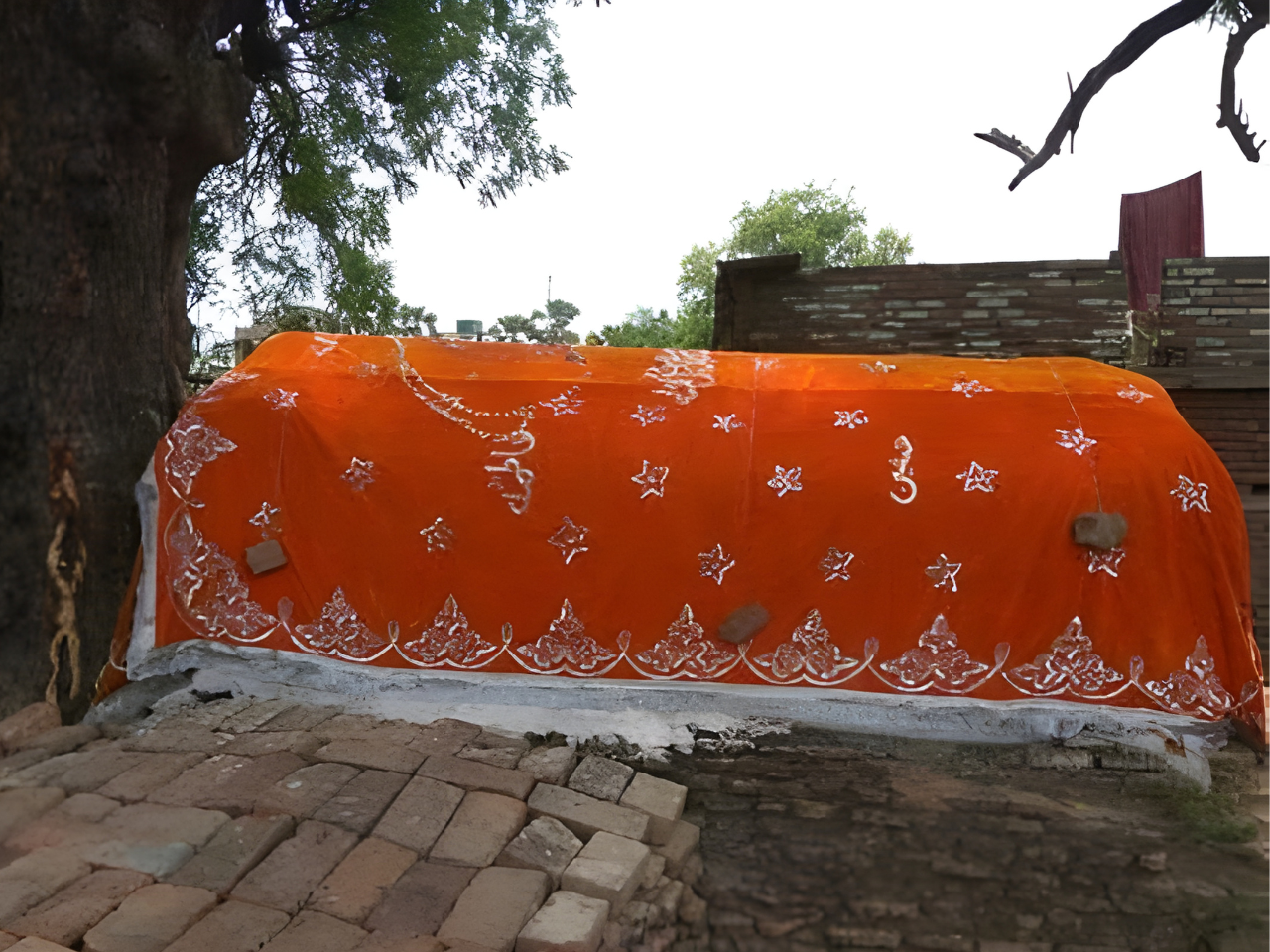
On 15th Muharram, 1017 Hijri, he departed from this mortal world, responding to the call of his Lord. His Mazar Sharif is located in Khandak Para, beneath the shade of a Neem tree, on a small earthen mound. It remains a place of reverence and visitation to this day.
May Allah grant us success in this world and the hereafter through his blessed intercession. Ameen.
Readers are requested to recite Surah Al-Fatiha and convey its reward to his noble soul.