
Written By Syed Arbaz Shahbazi
Sultān al-Ulamā Hazrat Shah Syed Ahmad Wajihuddin Alavi Al-Hussaini Gujarati
Birth and Lineage
Hazrat Shah Syed Ahmad Wajihuddin Alavi Al-Hussaini Gujarati (رحمة الله عليه) was born on 22nd Muharram, 910 Hijri, at the time of Subh-e-Sadiq, in the land of Dhar, in Muhammadabad of Gujarat, which is today widely known as Champaner, India. He was the spiritual heir of the Murshid of Sultan al-Arifeen Syed Shahbaz Muhammad Bhagalpuri (رحمة الله عليه).
His father was Shah Qazi Nasrullah Alavi (رحمة الله عليه), who served as the Chief Qazi of Champaner, and his grandfather was Shah Imaduddin Alavi (رحمة الله عليه). His noble ancestors were distinguished scholars of Islam, many of whom served as judges, mosque imams, and teachers.
The ancestral homeland of his forefathers was Yemen, a blessed land for which the Holy Prophet Muhammad ﷺ offered special supplications. From Yemen, one of his ancestors, Hazrat Shah Bahauddin Hussaini (رحمة الله عليه), migrated to Makkah Mukarramah, where he devoted himself to the service of Baitullah Sharif and to serving pilgrims by providing water. Upon receiving divine indication, he later migrated to Hindustan and settled in Gujarat, where generations later Hazrat Shah Wajihuddin (رحمة الله عليه) was born during the reign of Sultan Mahmud Begada.
His given name was Syed Ahmad, his title was Wajihuddin, and he was honorifically known as Ali-e-Sani, meaning “The Second Ali.” He followed the Hanafi school of jurisprudence. One of his early miracles was that he would not drink milk until his mother had performed ablution. His lineage traces back, in the 27th generation, to Ameer al-Mu’minin Sayyiduna Ali ibn Abi Talib (كرم الله وجهه).
Educational Journey
At a young age, his family relocated from Champaner to Ahmedabad, approximately 148 kilometers away, which was then a major center of learning. His formal education began at the age of five, and he memorized the Holy Quran in early childhood.
He studied Arabic grammar and literature under his uncle Qazi Shamsuddin (رحمة الله عليه), completing most of the Arabic texts under his guidance. Later, he studied additional texts with his maternal uncle Shah Bara Abul Qasim (رحمة الله عليه) and acquired advanced knowledge of Hadith under Shaykh al-Muhadditheen Allama Abul Barakat Bunyani Abbasi (رحمة الله عليه), completing Dawrah-e-Hadith, the highest degree in Hadith sciences.
For twenty four consecutive years, until the age of thirty three, he remained deeply engaged in learning and mastered over sixty disciplines. At the age of twenty five, he was officially appointed as the Mufti of Ahmedabad.
One of his teachers was Allama Imaduddin Muhammad Tarimi (رحمة الله عليه), under whom he studied logic and other sciences. Upon the sudden passing of this teacher, he became deeply grieved and secluded himself, constantly reflecting on the knowledge he had yet to acquire. During this period, he was blessed with a vision of the Holy Prophet Muhammad ﷺ, who handed him a page and said that it contained the knowledge he had not yet learned and that it was now granted to him. After this event, he never again experienced anxiety regarding knowledge, and even the most complex issues were resolved by him with ease.
Madrasa Aliyyah Alaviyyah
During the reign of Sultan Bahadur Shah, with the noble intention of spreading religious knowledge, he established his own madrasa in Khanpur, Ahmedabad, on land he personally owned. This institution became renowned as Madrasa Aliyyah Alaviyyah.
From its inception, students from near and far gathered there. The curriculum included Tafsir, Hadith, Fiqh, logic, philosophy, mathematics, and many other disciplines. Alongside academic learning, students were trained in spiritual purification and Tasawwuf. Initially, Hazrat himself taught most of the subjects and would often continue teaching at night after remembrance of Allah.
The madrasa rapidly gained fame, attracting students even from Lahore. Over time, it evolved into a prestigious university. Due to the growing number of students, his capable sons also joined as teachers. He was honored with titles such as Ali-e-Sani, Ustad al-Ummah Muhammadiyyah, Ustad al-Asatidhah, Ustad al-Bashar, Be-Nazeer Faqih, and Malik al-Muhadditheen.
It is narrated that nearly eighty thousand students studied under him, and several branches of the madrasa were established during his lifetime. A unique feature of this institution was the integration of Shariah and spiritual refinement, enabling students to graduate as both scholars and saints.
When he later intended to retire after sixty four years of teaching, he was instructed in a dream by the Holy Prophet Muhammad ﷺ to continue teaching. Thereafter, his lessons became known as Dars-e-Muhammadi, and he remained devoted to teaching until the end of his life.
Authorship and Service to Islamic Knowledge
Alongside teaching, he authored an immense number of scholarly works. There was virtually no branch of Islamic knowledge in which he did not write. He authored over one hundred works, including commentaries, marginal notes, and original treatises. According to Maulana Ghulam Ali Azad Bilgrami in Ma’asir al-Kiram, he authored 197 books, while other scholars report even more.
His works include texts on Hadith, Fiqh, Tafsir, Aqeedah, logic, philosophy, and spirituality. He also had a refined inclination toward poetry.
Status as a Mujaddid
The renowned scholar Allama Ali Muttaqi Hindi (رحمة الله عليه), while teaching Hadith in Madinah Munawwarah, was asked who the Mujaddid of the era was. After praying during Tahajjud, he received the answer through the Holy Prophet Muhammad ﷺ that the Mujaddid of the age was Wajihuddin Alavi. He immediately traveled to Ahmedabad to meet him and remained there thereafter.
Bay‘ah, Khilafat, and Spiritual Authority
He initially received spiritual training in the Chishtiyyah and Maghribiyyah orders from his father and later the Suhrawardiyyah order from Hazrat Badruddin Shah Bara Abul Qasim and Shaykh Najmuddin Siddiqi Suhrawardi.
Later, upon meeting Hazrat Shaykh Muhammad Ghaus Gwaliori (رحمة الله عليه) in Ahmedabad, he became deeply attached to him and received complete authorization in the Shattariyyah order, along with all spiritual permissions.
Relationship with Rulers
Throughout his life, he witnessed the reigns of ten to twelve kings, yet he avoided royal courts. On one occasion only, he appeared before Sultan Mahmud, solely to seek justice for an innocent man. The Sultan immediately complied, acknowledging Hazrat’s spiritual authority. No religious decree was issued in his era without his consent.
Compassion for Creation
His Khanqah was always filled with the poor and distressed. According to Mulla Abdul Qadir Badauni in Muntakhab al-Tawarikh, countless people afflicted with hardships and illnesses came to him for supplication, and Allah accepted his prayers swiftly. Any gifts he received were distributed entirely among the needy.
Piety and Asceticism
From childhood, he was deeply devoted to Shariah and cautious regarding halal and haram. He lived a simple life, wore modest clothing, avoided worldly pride, and gave away all gifts in charity.
Students and Successors
More than eighty thousand students studied under him, many of whom became renowned scholars, Muftis, Muhaddiths, and Qazis. His influence spread beyond Hindustan to the Arab world.
Journey to the Hereafter
In his final years, he taught only Hadith due to weakness. During a severe water crisis in Ahmedabad, he struck the ground with his staff, and by Allah’s grace, water emerged. This spring still exists near his shrine.
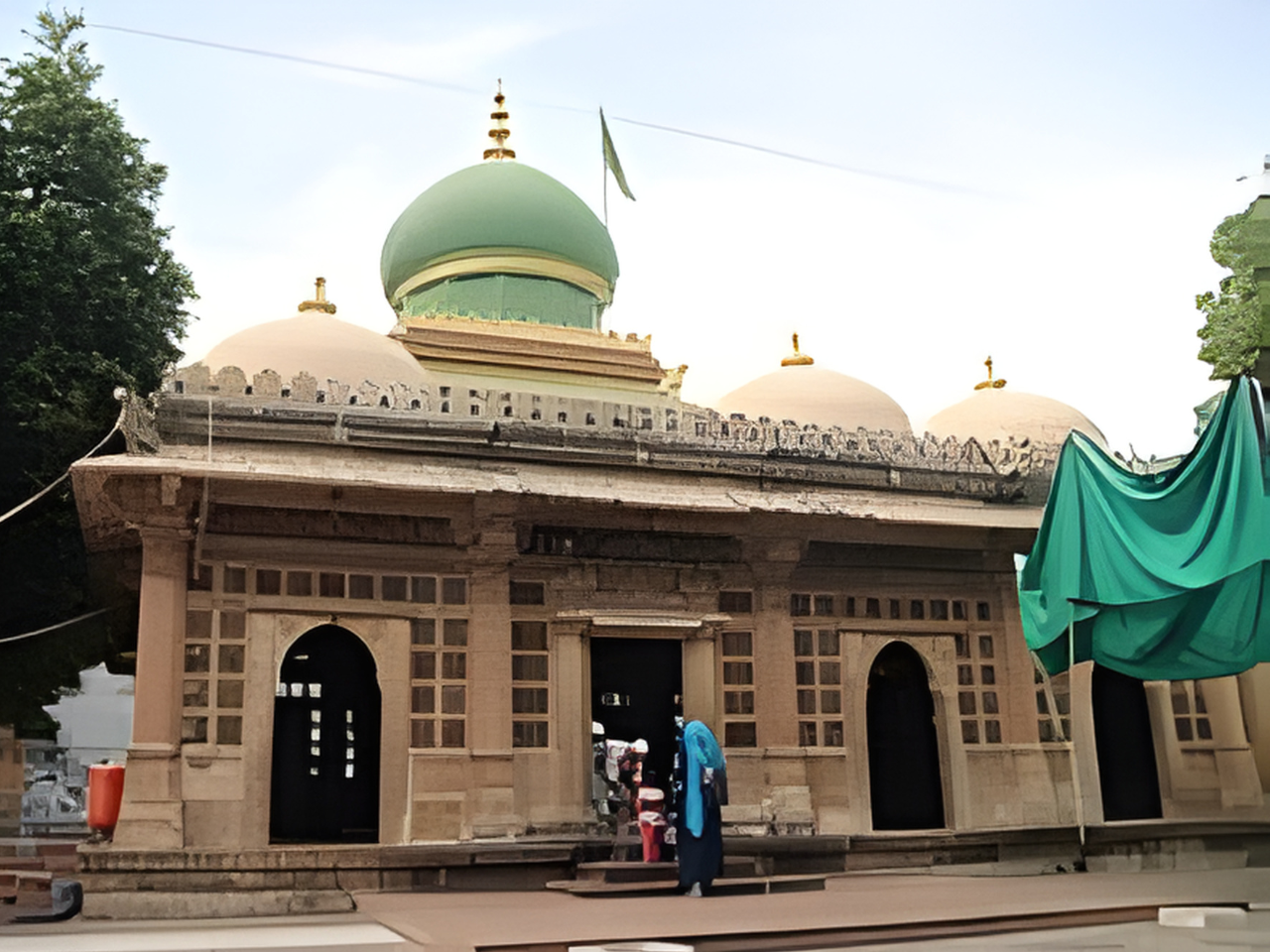
On 29th Muharram, 997 Hijri, corresponding to Sunday at Subh-e-Sadiq, at the age of eighty eight, Hazrat Shah Wajihuddin Alavi Gujarati (رحمة الله عليه) departed from this world. His funeral was attended by the entire city. He was buried in the courtyard of his Khanqah, and later a grand shrine was built by Nawab Murtaza Khan Khanpuri. His annual Urs is observed every year on 29th Muharram.
As long as Islamic knowledge continues to be practiced, the blessed name of Shah Wajihuddin Alavi Shattari (رحمة الله عليه) will remain honored and remembered.
May Allah grant us success in this world and the hereafter through his blessed intercession. Ameen.
Readers are requested to recite Surah Al-Fatiha and convey its reward to his noble soul.